Storm & Hurricane Damage
Tarp first, document second, rebuild third. In that order, and the middle one is the one people lose money on.
- Storm line
- Availability on request
- Tarp response
- Typically 48hr
- Documentation
- Before anything moves
- Claim deadline
- 1 year from landfall
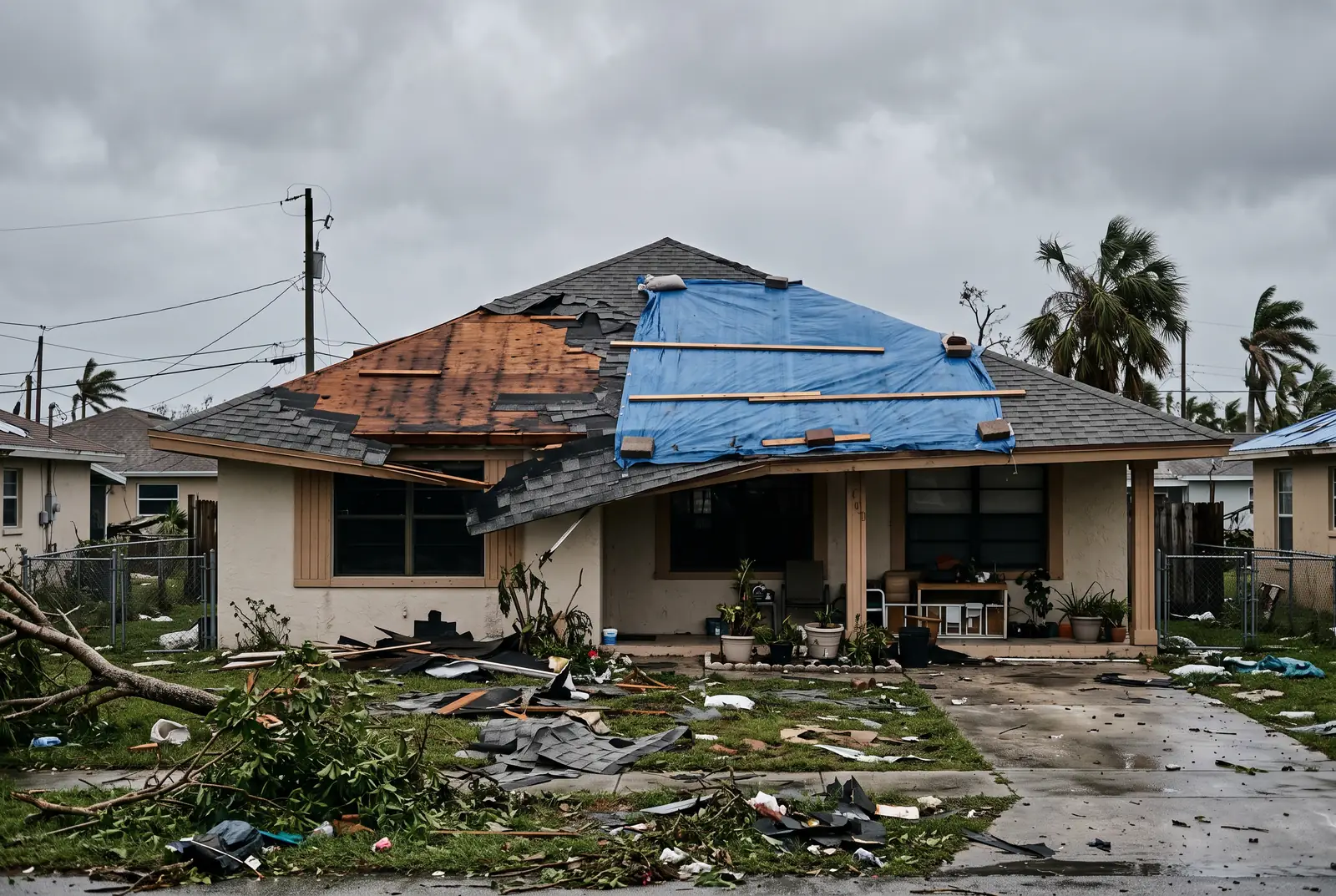
The first job after a storm is stopping more water getting in, because every Florida policy makes that your duty and because a wet ceiling becomes a wet truss quickly in this humidity. We carry tarp material through the season and we work the storm list by severity — anything with water actively entering the building goes first.
The second job is documentation, and it is the one that costs people money when it is skipped. Photographs of the damage in place, dated, with a written scope, before a tarp goes on and before debris is cleared. Adjusters need that. Once the yard is tidy and the roof is covered, proving what happened is much harder, and a supplement six months later is a fight rather than a conversation.
Contact your insurer promptly to confirm the reporting requirements and deadlines that apply to your policy and loss. A roofing enquiry does not open an insurance claim.
If anyone offers to waive your deductible, walk away
Ask your insurer to explain your deductible and payment obligations. Review the written contract and do not rely on promises that change your policy obligations.
What is in the price
Emergency tarping
Battened properly rather than weighted with tyres, so it survives the next squall line.
Dated photographic record
Taken before anything is moved or covered, with an itemised written scope.
Adjuster meeting attended
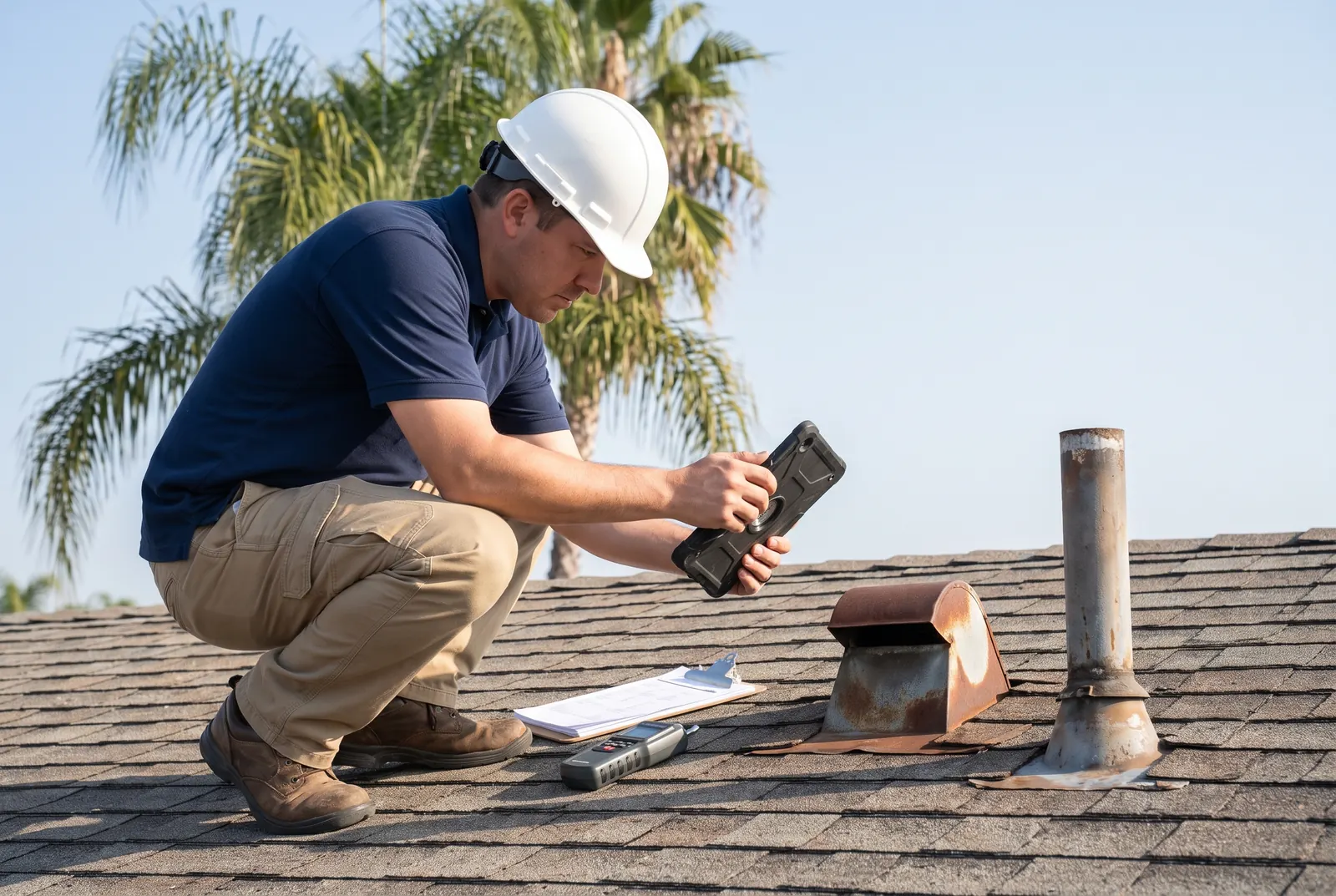
We walk the roof with your adjuster so that what is actually up there ends up in the scope.
Interior protection
Ceilings covered and standing water handled where it has already come through.
Full rebuild to current code
Not put back as it was. Re-nailed deck, sealed deck, and the mitigation form completed at the end.
Itemised invoices for the claim
Tarping and mitigation costs itemised separately, because they are usually recoverable.
How it runs
- 1
Call the storm line
Tell us whether water is actively entering. That is what moves you up the list, not who called first.
- 2
Document, then tarp
Photographs and scope before the tarp goes on. It takes twenty extra minutes and it protects the claim.
- 3
Adjuster inspection
We attend, walk the roof with them, and follow up in writing on anything not captured.
- 4
Rebuild and close the file
Permitted rebuild, progress photographs, product approvals and a completed wind mitigation form for your carrier.
Questions on this one
How fast can you tarp?
In season, typically inside forty-eight hours, and faster where water is actively coming into the building. After a major landfall the honest answer is that everyone in the county is calling everyone — we work by severity and we will tell you a real position rather than a comfortable one.
Will insurance pay for the tarp?
Usually, as reasonable emergency mitigation, which your policy requires you to carry out. Keep the invoice. Ours is itemised separately from any repair work precisely so it can be submitted on its own.
Do you handle the claim for me?
We document it, attend the inspection and read the estimate with you. Negotiating the claim itself is public adjusting and it is licensed separately in Florida. Any roofer who tells you they will 'handle the whole claim' is either misinformed or operating outside the law.
Request an assessment
Get it looked at.
Plan the next step.
Describe the property and the work you are considering. The team will need to confirm the assessment, scope, costs and appointment availability.
Office
Roofing enquiries
Yard
5038 Westminster Dr
Fort Myers, FL 33919
Hours
Visits by appointment
Availability confirmed by the team
Contact the team about availability